
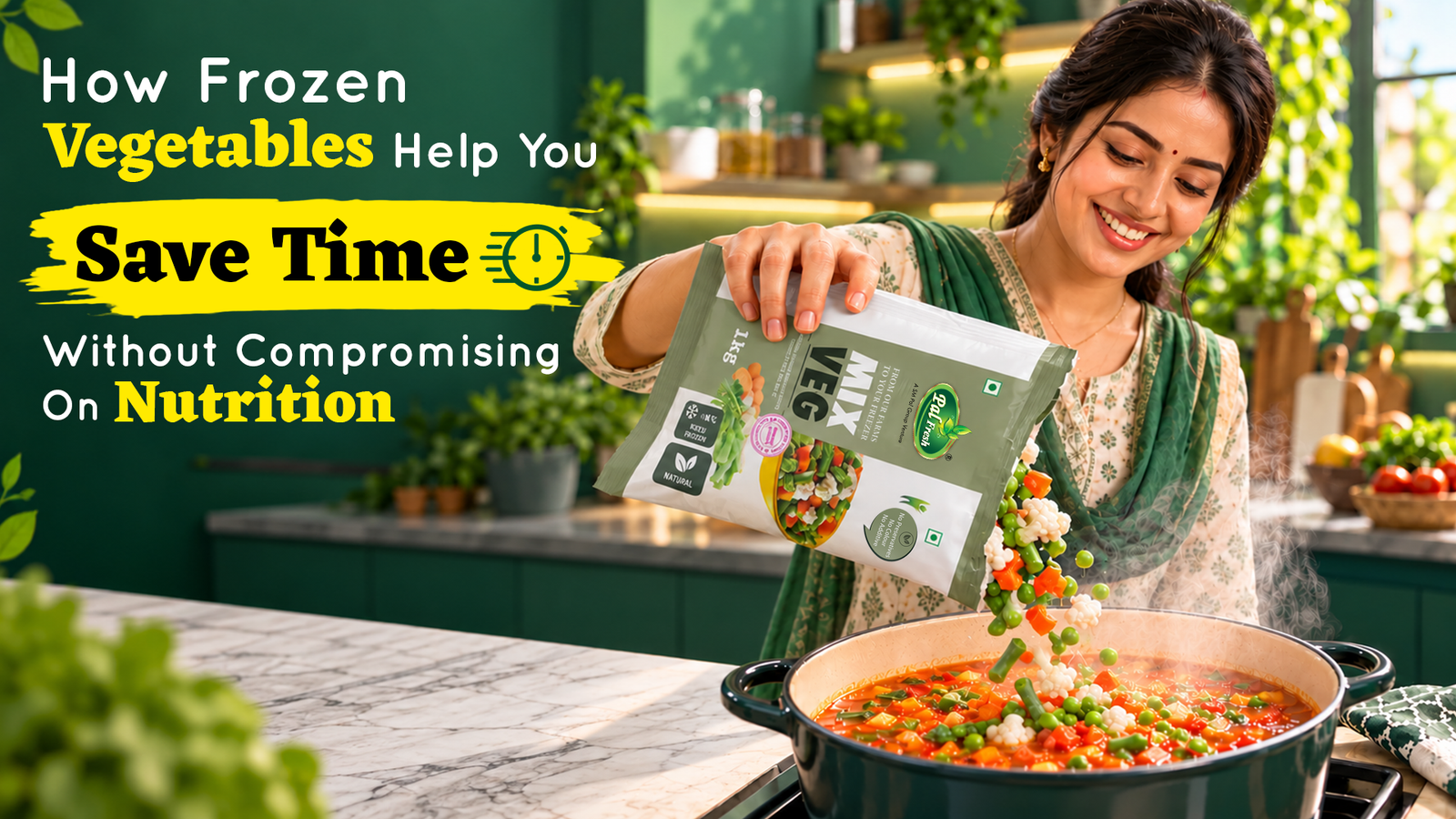
Stop scrolling: it’s 7:45 pm, you’re exhausted, and the fresh beans you bought on Sunday have already gone limp.
We’ve all been there. You meant to cook something healthy, but the chopping, washing and peeling got in the way. Takeaway starts to look very tempting.
Here’s the good news: frozen vegetables can fix this. They give you real, wholesome food in minutes, with no compromise on goodness.
So, do frozen vegetables really save time without losing nutrition? Yes, they do. Frozen vegetables are washed, cut and frozen soon after harvest, so the prep is already done and most nutrients are locked in. You skip the chopping, cut food waste and still get vitamins, minerals and fibre. For busy households, that’s a genuine shortcut with no real nutritional trade-off.
Why do frozen vegetables feel like a cheat code for busy evenings?
Think about what a simple vegetable dish demands. You wash, peel, chop, cook and then clear up. That can easily eat 20 to 30 minutes before a pan is even hot.
Frozen vegetables skip nearly all of it. Open the bag, pour out what you need and cook. Your green peas are already shelled. Your cauliflower is already in florets. Your spinach is already clean.
Where the time really goes
- No peeling, shelling or chopping
- Less washing and less mess on the counter
- Almost nothing in the bin afterwards
- Fewer last-minute dashes to the market
If you’re juggling work, school runs, workouts or all three, those saved minutes add up fast. Many of us treat them as a daily gift.
Are frozen vegetables as nutritious as fresh ones?
This is the question everyone asks, and it’s a fair one. Many of us grew up believing “fresh is always best”. The truth is more interesting.
Fresh vegetables start losing some vitamins the moment they are picked. By the time they travel to a market, sit on a shelf and wait in your fridge, several days may have passed. Some of the more delicate nutrients, such as vitamin C, can fall during that wait.
Frozen vegetables work differently. They are frozen soon after harvest, which pauses that decline. So the vegetable in your bag is often much closer to its just-picked self than the “fresh” one that has been travelling for days.
To be completely honest, the picture isn’t perfect. Some vegetables are briefly blanched before freezing, which can slightly reduce certain water-soluble vitamins. Even so, frozen vegetables stay broadly comparable to fresh ones, and often match them or beat them when the fresh produce isn’t truly fresh.
What is IQF and why should you care?
You might spot “IQF” on a pack. It stands for Individual Quick Freezing, and it’s the reason good frozen vegetables behave so nicely.
With IQF, each piece is frozen separately and very quickly. That means:
- Peas, sweetcorn and florets stay loose instead of freezing into a solid block
- You can pour out exactly what you need and reseal the rest
- Texture and colour hold up better after cooking
- Nutrients are protected by the speed of the freezing
This is the technology behind Pal Fresh, SM Pal Group’s frozen vegetable brand. Pal Fresh vegetables are processed in Haldwani, in the heart of an agricultural belt. They work with farmers through Pal Farms, so the produce is frozen close to where it grows. Across the range, more than 15,000 metric tonnes have been processed.
How can frozen vegetables help you eat better, not just faster?
Convenience only matters if it helps you eat well. Here’s where frozen vegetables quietly help.
You eat more vegetables, more often. When a bag of mixed vegetables is already in your freezer, adding a handful to dinner takes seconds. People tend to cook with what’s easy.
You waste less food. Fresh vegetables that wilt in the fridge are money in the bin. Frozen ones wait patiently until you need them.
You get variety all year round. Green peas, broccoli, spinach and baby corn are available whatever the season. That helps keep your meals interesting and your plate colourful.
You stay in control. Because IQF pieces stay separate, you can use a small portion today and keep the rest for later. No guesswork, no leftovers going off.
How do you cook frozen vegetables so they taste great?
Good news: it’s easy. A few small habits make a big difference.
- Cook straight from frozen. No, vegetables don’t need thawing. Going straight into the pan helps them keep their shape.
- Use high heat for stir-fries. Get the pan hot first, then add the vegetables so they sear rather than steam into softness.
- Don’t overboil. Frozen vegetables are already partly prepared, so they cook faster than you expect. Check them early.
- Season at the end. Salt, pepper, a squeeze of lemon or a pinch of chaat masala can lift the flavour in the last minute.
Five quick ideas for busy days
- Ten-minute pulao: toss mixed vegetables into rice with whole spices.
- Weeknight sabzi: sauté cut beans or cauliflower with onion and masala.
- Protein-packed bowl: pair broccoli and sweetcorn with paneer or eggs.
- Warming soup: simmer spinach and carrot with garlic and blend smooth.
- Post-workout plate: stir-fry baby corn and peas with tofu or chicken after a run, when you’re hungry and short on time.
If you’re in the mood for something more indulgent, SM Pal Group’s Frozzo range of momos, spring rolls and samosas pairs well with a side of quick-cooked vegetables.
Frequently asked questions
Yes, frozen vegetables are generally comparable to fresh ones in nutrition. They are frozen soon after harvest, which preserves most vitamins and minerals. Fresh produce that sits for days in transit and storage can lose some nutrients before it reaches your plate.
No, Frozen vegetables can go straight into the pan, pot or steamer. Cooking from frozen helps them keep their shape and texture. Thaw only when a recipe needs it, such as for fillings, and drain well afterwards.
IQF stands for Individual Quick Freezing, a method that freezes each piece separately and rapidly. This keeps vegetables loose rather than clumped, so you can pour out only what you need. Fast freezing also helps protect texture and nutrients.
Stored at a steady −18°C or colder, frozen vegetables stay safe indefinitely, but quality is best within about 8 to 12 months. Always check the pack for the recommended date, keep bags sealed and avoid thawing and refreezing.
Yes, they fit easily into a balanced diet because they are convenient, available year-round and usually contain no added ingredients. Check the label to confirm the pack contains only vegetables, then add them to curries, pulao and soups.
Pal Fresh offers frozen green peas, sweet corn, baby corn, mixed vegetables, broccoli, cauliflower, cut beans, okra, spinach and more. They are processed using IQF technology near Pantnagar in Uttarakhand, so each pack stays loose and easy to portion.
Wrapping up
Frozen vegetables give you the best of both worlds: minutes saved in the kitchen and nutrition you can feel good about. Prep is done, waste is low and a healthy meal is always within reach.
Ready to make weeknights easier? Stock your freezer with Pal Fresh frozen vegetables from SM Pal Group, made with IQF technology and grown by Uttarakhand farmers. Ask for Pal Fresh at your nearest store today, explore the full range at smpalgroup.com, and turn your next “what’s for dinner?” into a ten-minute win.